Image to Image
Week 4 · SLOP8760
Phase 2 of 4 · Four Generators
This week adds
Image to image: pushing something you already have toward a finished keyframe, with one dial deciding how much of it survives.
One number decides it
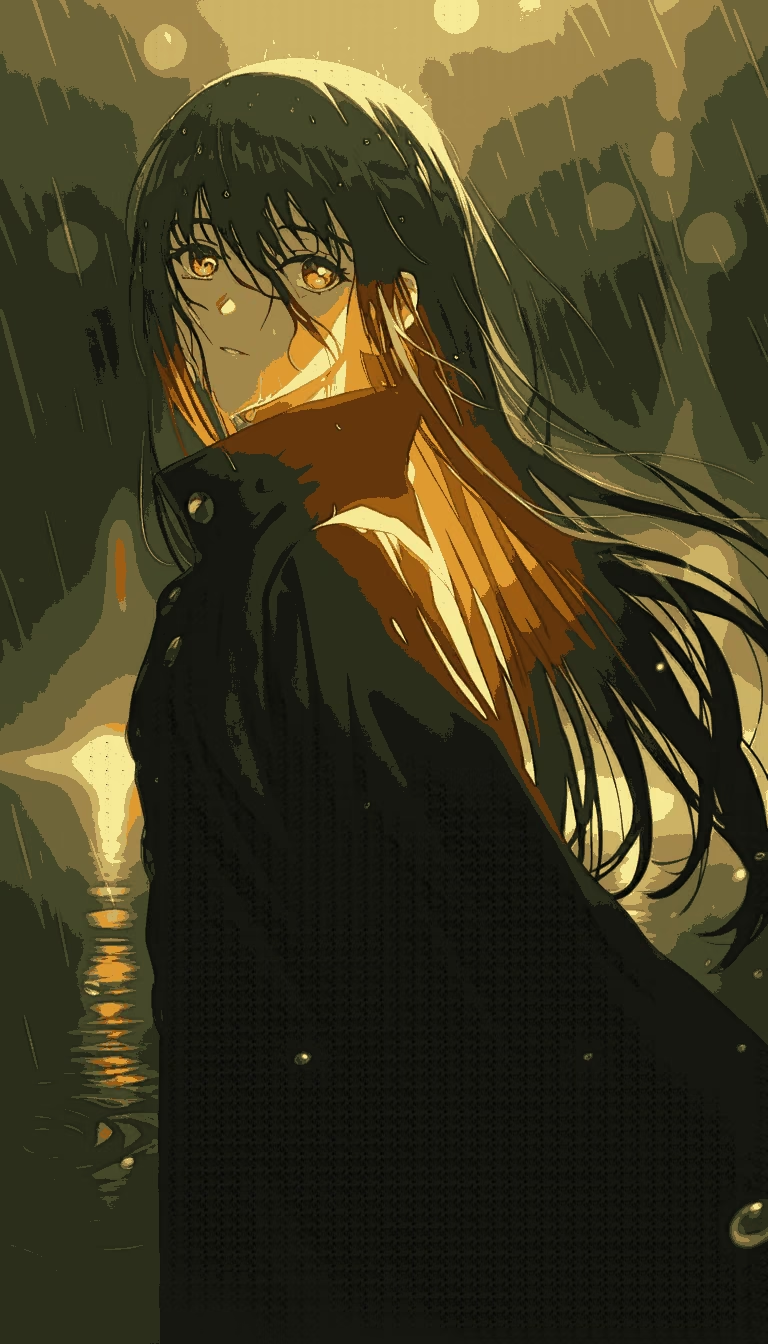
One prompt and one strength across all five tiers. At denoise 1 the docs
say the latent becomes completely random noise, losing all characteristics of
the reference image.
Source: ComfyUI docs, image-to-image — https://docs.comfy.org/tutorials/basic/image-to-image
A pose signal is a list of coordinates
25body keypoints, plus 21 per hand and 70 on the face
ControlNet does not read your picture. It reads a signal extracted from it,
and a pose signal is numbers: x0,y0,c0,x1,y1,c1,..., starting at the nose
and the neck.
Source: OpenPose output documentation — https://github.com/CMU-Perceptual-Computing-Lab/openpose/blob/master/doc/02_output.md
first adds noise to the input, then subsequently denoises the resulting image
Meng et al., SDEdit, 2021
Source: SDEdit — https://arxiv.org/abs/2108.01073
Structure and identity
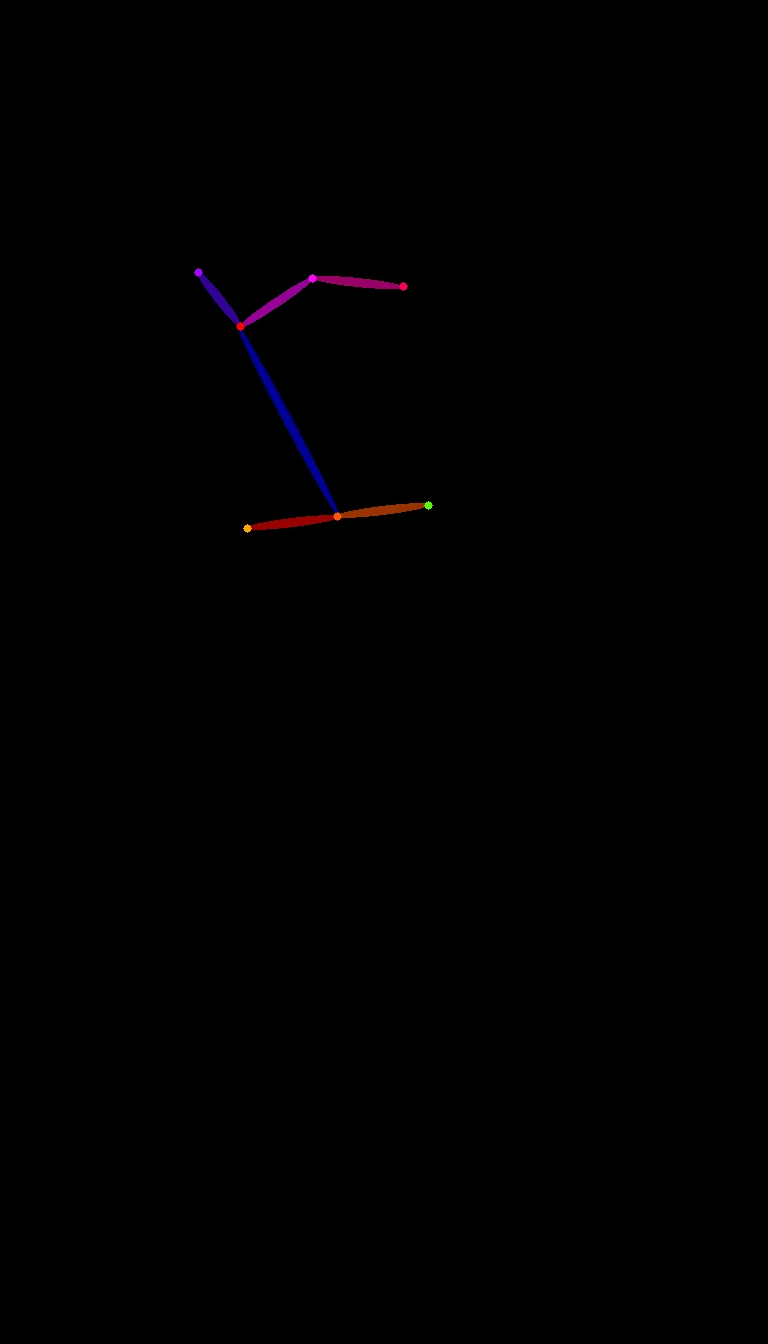
ControlNet holds one extracted signal fixed — edges, depth, pose — through what it calls zero convolutions. IP-Adapter does the other job: identity carried from a reference, in 22M parameters.
Source: ControlNet — https://arxiv.org/abs/2302.05543
Source: IP-Adapter — https://arxiv.org/abs/2308.06721
The ladder
One prompt, one strength, five inputs.
- A rough sketch
- Clean lineart
- Flat-coloured lineart
- An already finished keyframe, refined rather than built
- That same keyframe plus a ControlNet pose signal locking the composition
Before class
Bring one keyframe from Phase 2 so far, and sketch three rougher versions of it at decreasing levels of finish, to use as this week’s ladder of inputs.
This week’s exercise
Run the same prompt and denoising strength against your four rough inputs plus one ControlNet-locked pass, producing all five ladder tiers. Bring all five outputs, their shared prompt, and the strength value used to Wednesday’s Dailies.
Reading
SDEdit: Guided Image Synthesis and Editing with Stochastic Differential Equations
Meng et al.2021
first adds noise to the input, then subsequently denoises the resulting image
Adding Conditional Control to Text-to-Image Diffusion Models
Zhang, Rao & Agrawala2023
robust with small (<50k) and large (>1m) datasets
IP-Adapter: Text Compatible Image Prompt Adapter
Ye et al.2023
decoupled cross-attention mechanism
Comfy Org
the latent space image will become completely random noise