- an ant
- carrying food
- scent to food
- scent home
Press Run
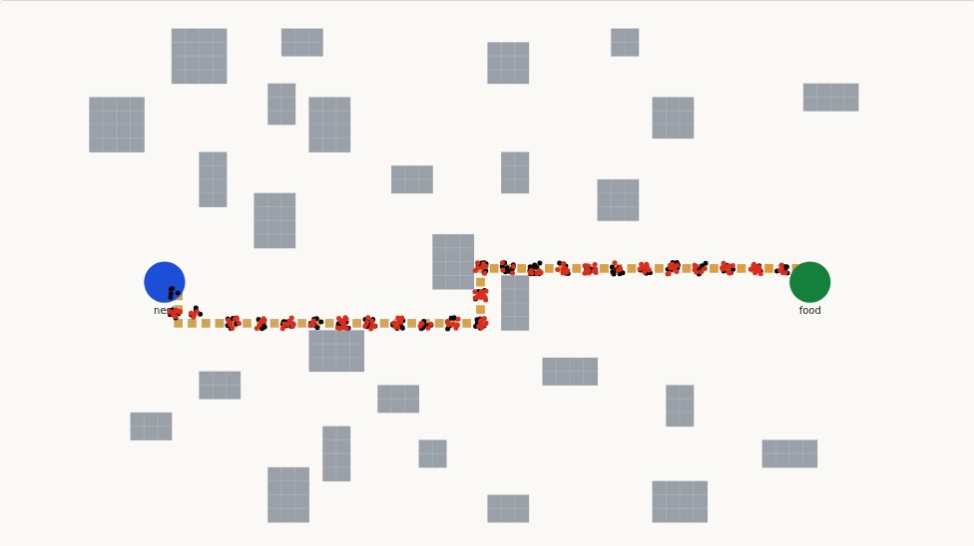
For the first few seconds they spill everywhere; then one route thickens, the rest fade, and within twenty seconds there is a road. Nobody chose it — the first ants to make it home reinforced their own path, so it is usually short and sometimes not, and the number beside the field tells you which.
Draw a wall
Draw a wall across the road: the ants pile against it, spill round the ends, and within seconds a new road has formed. No ant noticed a problem — the blocked road simply stopped being reinforced, and wherever enough ants got through, their scent became the road.
Try both ends
Set forgetting to zero, press Reset and let a road grow before you break it: scent that never fades keeps them pouring into the dead end long after it is one. Push forgetting to the far right and no road survives at all; between those two ends the road forms and repairs itself every time — a tendency, not a guarantee, and no ant is doing the planning.
no reading yet
warming up